Rhymes and Rhythm: The Secret Link Between Music and Reading Literacy
 Published by The Times of Smithtown, April 30, 2026
Have you ever wondered why children insist on hearing the same rhyming story, over and over, until the book is practically worn out?
Children seem to be naturally wired for rhythm and repetition. When a child learns to read a story or listen to a song, they begin to recognize patterns, and repetition makes that experience increasingly fun and familiar.
When you combine music and literacy together, young readers are not only entertained, but they’re also training their brains much more effectively. Learning to read proficiently involves far more than simply identifying a bunch of letters or symbols on a page. When an experienced reader looks at a page of text, there’s a process of pattern recognition taking place. They learn to quickly scan words and sentences while hearing the sounds of those words and phrases in their heads, along with a certain rhythm and cadence.
Turns out, those are exactly the same muscles we use when we read music. At first, musicians learn to slowly interpret those black dots and lines on a staff. However, through repeated practice, their brains learn to translate those symbols and patterns into sounds and timing. In much the same way, when a child picks up a rhyming story, they begin to anticipate the patterns they see and hear frequently, and soon they feel the rhythm and hear the music of language itself. When we teach a child to play an instrument such as a guitar or piano, we’re essentially strengthening their ability to recognize those same types of patterns in the books they read.
Some educators introduce music into school and library reading programs primarily to engage children and maintain their attention, yet the benefits run much deeper. Certainly, playing the guitar and singing songs between book readings are effective ways to keep the room energetic and interactive. But something more exciting happens when music and literacy are combined. Singing songs about a book just read aloud can actually reinforce the stories and their embedded lessons. This combination helps children better understand the story’s concepts and how language works.
For example, music can serve as a powerful memory tool when teaching some of the trickier aspects of the English language, like plural nouns (why is more than one house “houses,” while more than one mouse is “mice”?), or the playful confusion and humor of homophones like “bare” and “bear.” Instead of memorizing definitions, the children laugh, sing, and truly feel these words and their meanings.
Have you noticed that when you read a rhyming book, children quickly start to guess what’s next? That feeling of “I know what’s coming” makes reading feel fun, like a game they already know how to play. And it builds their confidence instantly. The rhymes in books are similar to the rhythm in music, and you can almost instinctively sense what’s coming next.
One effective technique is to invite children to actively participate. When reading the picture book ‘Mia’s Mouses’ aloud in schools, the presenter can encourage children to shout out “mice!” each time the story calls for it. When a verse ends with words like “nice” or “advice,” watch their little faces light up, and how they sit on the edge of their seats in anticipation. They intuitively know the rhyme “mice” is coming next!
Similarly, whether a child is playing an instrument, singing, or just clapping along to a beat, they are training their brain and their ears to listen to the tiny, individual sounds that make up words. The ability to hear and distinguish those sounds is one of the most important secrets to becoming a great reader.
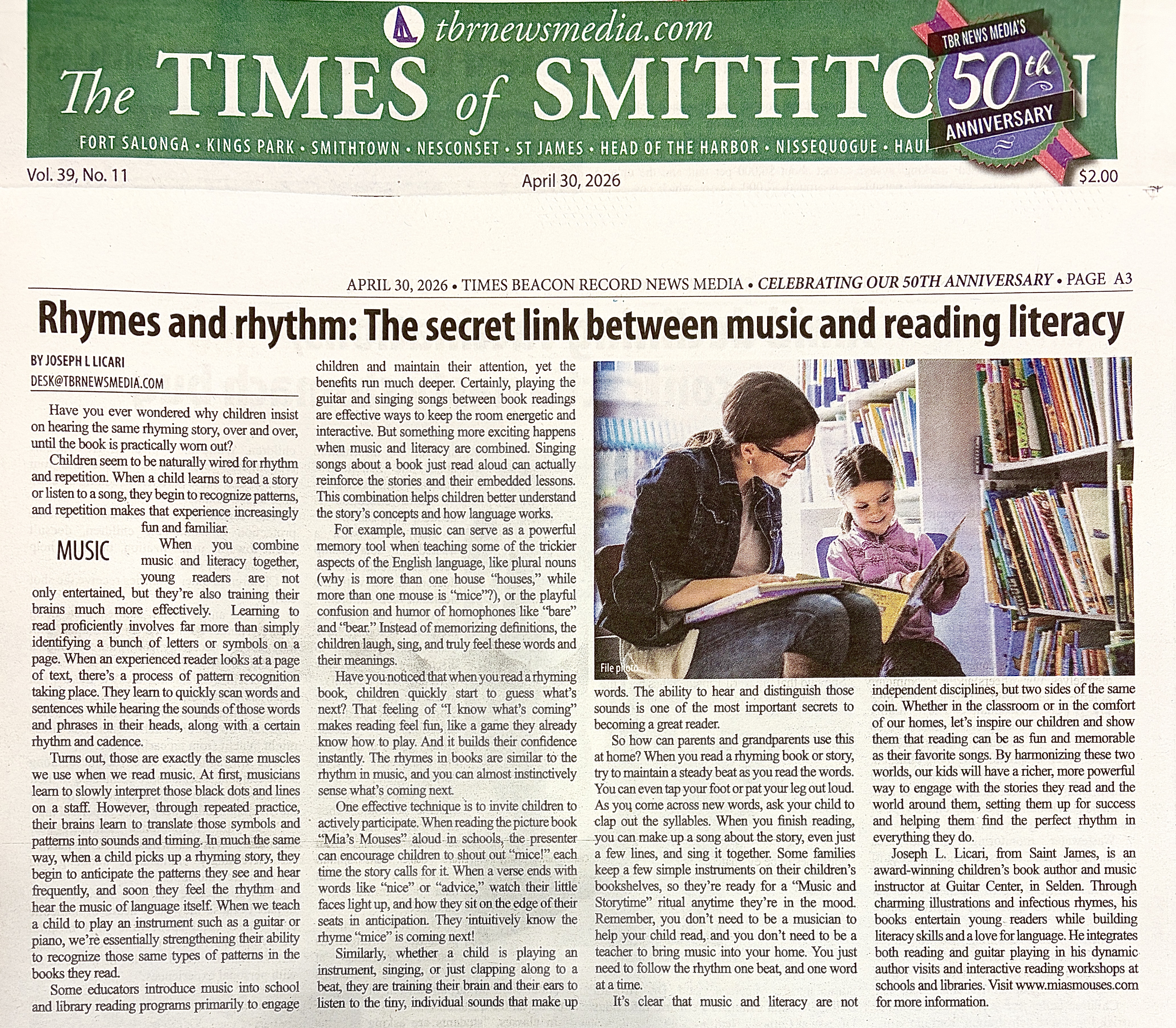
So how can parents and grandparents use this at home? When you read a rhyming book or story, try to maintain a steady beat as you read the words. You can even tap your foot or pat your leg out loud. As you come across new words, ask your child to clap out the syllables. When you finish reading, you can make up a song about the story, even just a few lines, and sing it together. Some families keep a few simple instruments on their children’s bookshelves, so they’re ready for a “Music and Storytime” ritual anytime they’re in the mood. Remember, you don’t need to be a musician to help your child read, and you don’t need to be a teacher to bring music into your home. You just need to follow the rhythm one beat, and one word at a time.
It’s clear that music and literacy are not independent disciplines, but two sides of the same coin. Whether in the classroom or in the comfort of our homes, let’s inspire our children and show them that reading can be as fun and memorable as their favorite songs. By harmonizing these two worlds, our kids will have a richer, more powerful way to engage with the stories they read and the world around them, setting them up for success and helping them find the perfect rhythm in everything they do.
Joseph L. Licari, from Saint James, NY, is an award-winning children’s book author and music instructor at Guitar Center in Commack, NY. Through charming illustrations and infectious rhymes, his books entertain young readers while building literacy skills and a love for language. He integrates both reading and guitar playing in his dynamic author visits and interactive reading workshops at schools and libraries. Visit www.miasmouses.com for more info.